
For every airman, physical preparation is not only a case of passing the USAF Physical Fitness Assessment (PFA) – it is about establishing a standard of excellence. Whether you are on active duty or preparing to join a rank, your PT score directly impacts your progress in your career, preparation for deployment, and your reliability as a service member.
This is where the USAF PT Test Calculator is used. This is a simple but powerful tool that helps you predict your score, track, and improve, as well as the official Air Force Instruction (AFI), based on the scoring table. This is the ultimate smart train, not difficult.
1. Understanding the USAF PT Test Components
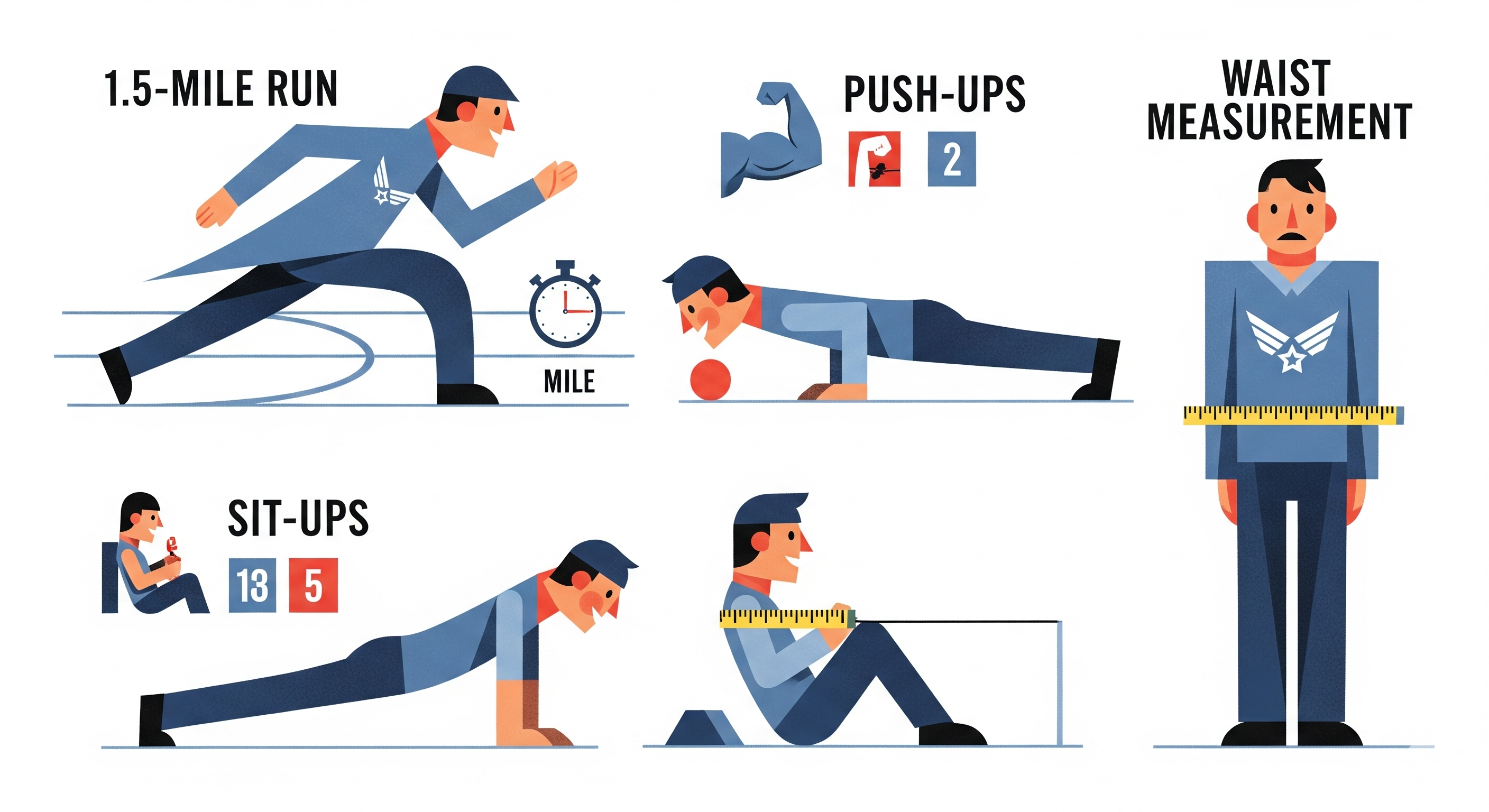
Before using the calculator effectively, you need to understand the structure of the PT test. The USAF PFA (Physical Fitness Assessment) evaluates three things: cardio, strength and body structure – and each one has its weight in the total score.
Cardio (60%of total score)
1.5-mile race or 20-meter HAMR (High Aerobic Multi-Settle Run).
Time-based scoring is – the faster you run, the better the score.
Strength (20%of total score)
Push-ups and sit-ups.
Points are given based on how much you have completed within a minute.
Physical structure (20%of total score)
Waist measurement or BMI option.
The small waist circumference means high digit.
The score of every component is added to your composite PT score, which decides your rating:
Excellent: 90
Satisfactory: 75-89.9
Unnecessary: below 75
2. What is a USAF PT Test Calculator?
The USAF PT Test Calculator is an online tool that calculates your approximate fitness score based on the official AFI scoring chart.
These are compared to manual calculations:
The scoring is eliminated to eliminate errors.
Reactions quickly.
And you get the option to test various performance scenarios.
👉 Example: Enter your real push-ups, running time, and waist size and look at your current score. Yes, then enter your target number and understand what you have to achieve for an “excellent” rating.
Whether you speak it to the Air Force PT score calculator, PT test scoring guide, or the fitness calculator for the airmen, the idea is the same: Quick and accurate scoring that guides your training.
3. Step-by-Step Guide: Using the USAF PT Test Calculator
Step 1: Input Your Data
Enter:
- Age & gender (for age-bracket scoring adjustments).
- Cardio performance (run time or HAMR level).
- Push-up and sit-up counts.
- Waist measurement.
Pro Tip: Accuracy matters—use a stopwatch for run times and measure waist circumference correctly.
Step 2: Select Your Test Components
The calculator lets you choose:
- Run or HAMR
- Sit-ups or Planks (if applicable)
- Waist or BMI alternative
It also adjusts for exemptions.
Step 3: Review Your Score Breakdown
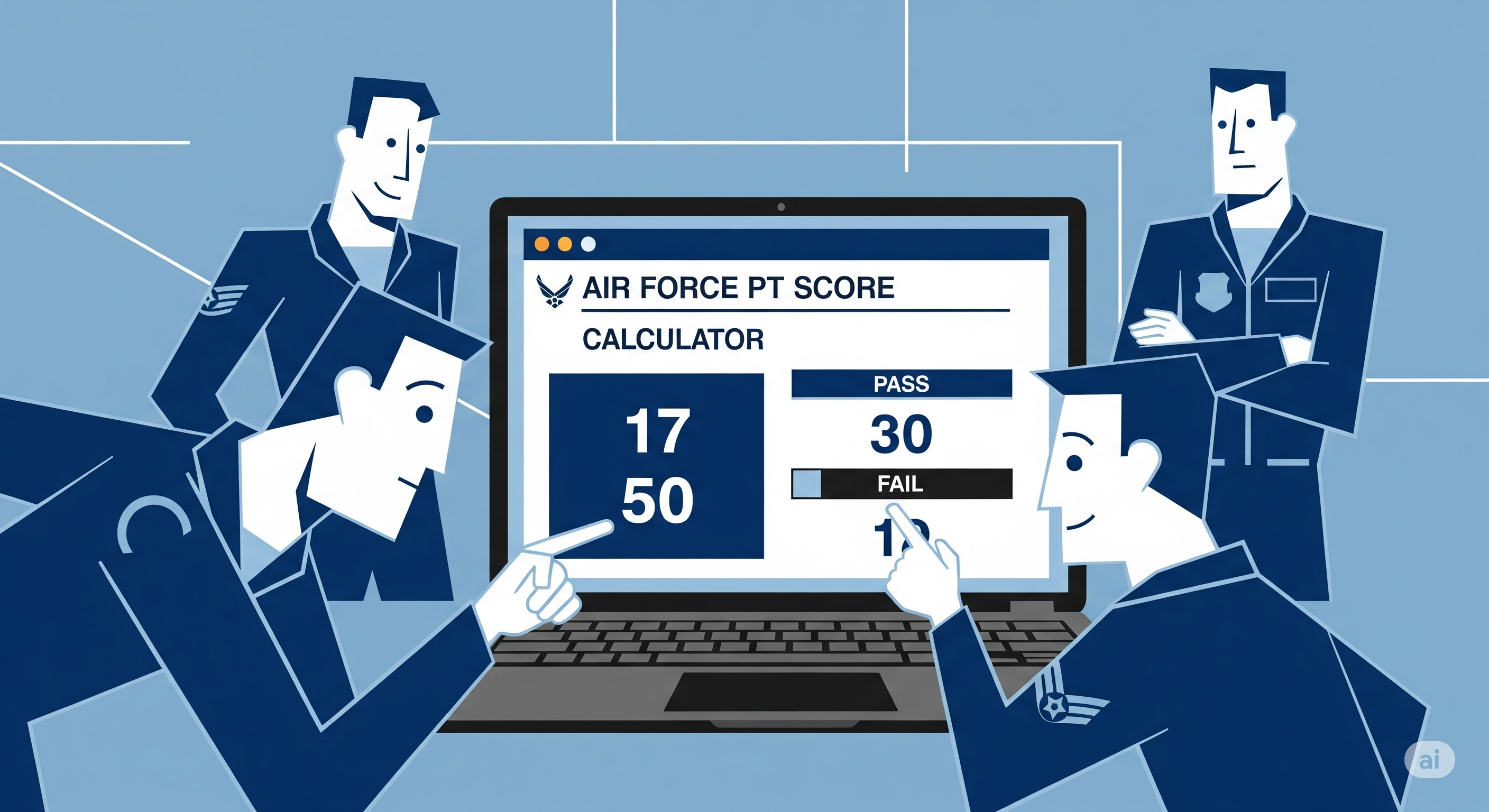
After entering your data, you’ll see:
- Component scores (cardio, strength, body composition).
- Total composite score.
- Performance category (Excellent, Satisfactory, Unsatisfactory).
Step 4: Interpret the Results
- Excellent means you’re meeting top standards.
- Satisfactory means you pass but could improve.
- Unsatisfactory means you must train harder before your next test.
Learn how to interpret your PT scores → /understand-usaf-pt-test-results
4. Tips to Maximize Your USAF PT Test Scores Using the Calculator

Set training goals
If your run time is bringing only a 38/60 score, then set a goal to improve your score by shaving 30 seconds off your time.
Pay attention to weak areas
The same low-scoring component can pull down the entire composite score.
Elect the test
Make your better imaginary results and see what effect they have had on the total score.
Track progress
Every month, make a record of your score so that the trend of improvement can be understood.
Adjust for age group
Scoring changes at some age- adjust your training plan accordingly.
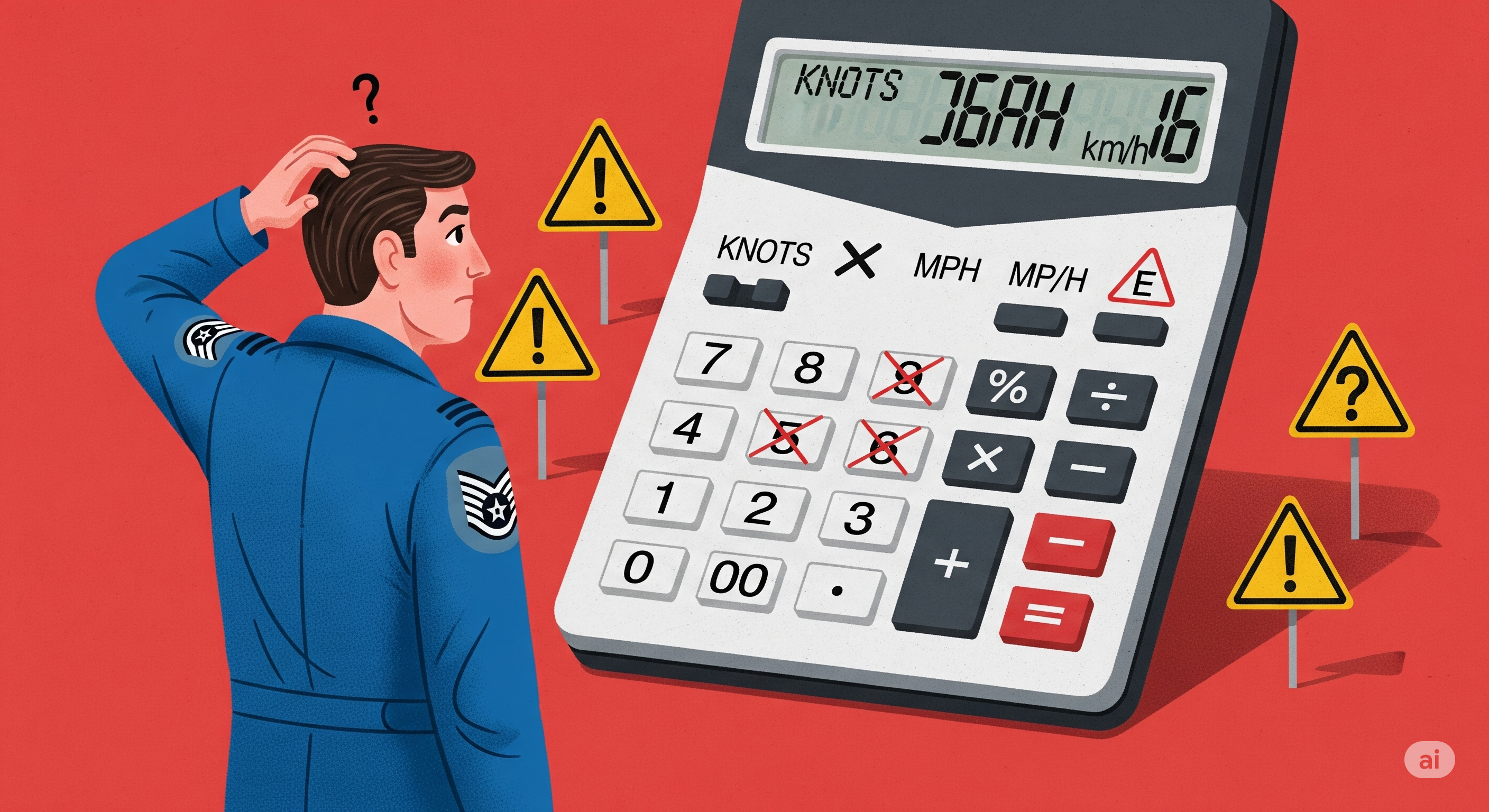
5. Common Mistakes When Using a PT Test Calculator

- Wrong units (minutes vs. seconds, inches vs. cm).
- Using outdated AFI tables—rules change over time.
- Ignoring exemptions—this can artificially inflate your predicted score.
- Overestimating performance—train for reality, not wishful thinking.
6. Advanced Use: Strategic Score Optimization
The calculator isn’t just for scoring—it’s for strategy.
- What-if Analysis: See if improving push-ups by 5 reps is more beneficial than cutting 15 seconds off your run.
- Component Swapping: If HAMR suits your fitness better than the run, use that option.
- Precision Training: Pair the calculator with the official PT test scoring guide to fine-tune training.
7. Preparing for Test Day with Data-Driven Training

Using the calculator as a guide:
- 90 Days Out: Build a balanced program targeting all components.
- 60 Days Out: Focus on your weakest event.
- 30 Days Out: Simulate test conditions and refine pacing.
8. Why Every Airman Should Use a PT Test Calculator

- Ensures test-day readiness.
- Reduces surprises during official scoring.
- Motivates consistent training.
- Maintains career mobility and promotion eligibility.
9. FAQ – USAF PT Test Calculator
Q1: What is the USAF PT Test Calculator?
It’s an online tool that calculates your Air Force PT score using official AFI scoring tables.
Q2: How is the USAF PT score calculated?
The score combines cardio, strength, and body composition results, each weighted according to Air Force standards.
Q3: Can I use the calculator to predict my PT test results?
Yes. Enter your expected performance to estimate your score and identify areas to improve.
Q4: Does the calculator account for exemptions?
Yes—good calculators automatically adjust scoring if you’re exempt from a component.
Q5: How often should I use the PT Test Calculator?
At least monthly during training, and weekly in the 30 days before your official test.
Q6: Is USAF PT scoring the same for all ages?
No. Scoring thresholds change by age bracket, and the calculator applies these automatically.
Q7: Where can I learn more about interpreting PT scores?
See: Learn how to interpret your PT scores → /understand-usaf-pt-test-results
Conclusion
Maximizing your PT score isn’t about luck—it’s about data, preparation, and strategy. The USAF PT Test Calculator turns raw numbers into actionable goals, giving you a clear path to an Excellent rating.
Use it regularly, train with purpose, and keep your readiness high. Your next PT test can be your best one yet.